

Over 50s Health Insurance: A UK Guide

Start saving money on Life insurance today
Over 50s health insurance is a type of private medical cover designed to give you faster access to eligible medical treatments in the UK. It works alongside the NHS, offering peace of mind by covering the costs for new, acute conditions that arise after your policy begins. Its main purpose is to help you bypass potential NHS waiting lists for specialist consultations, diagnostic tests, and procedures.
Why Consider Health Insurance After 50?
As we get older, it is natural for our health to become a greater priority. While we are fortunate to have the NHS, concerns over long waits for appointments, scans, and treatments are growing. This is where private health insurance can step in as a valuable safety net.
This guide is not financial advice. It is designed to empower you with straightforward, impartial information about over 50s health insurance. We want to help you understand how it works alongside the NHS, what it typically covers, and the key factors that influence your choices and costs.
Peace of Mind and Quicker Access
For many people over 50, the biggest attraction of private medical insurance is getting timely access to healthcare. The stress of waiting for a diagnosis or an operation can take a huge toll, affecting not just your physical health but also your mental wellbeing, your ability to work, or your enjoyment of retirement.
This concern is backed by data. A YouGov poll from June 2023 showed that people over 50 are far more worried about healthcare than younger age groups. Their top concerns included long waiting times and difficulty accessing necessary services. Discover more about these healthcare concerns and what drives the decision to seek private care.
Having a policy in place means you can often get the care you need, when you need it, which can make a significant difference to your recovery time and overall quality of life.
How Does It Complement the NHS?
It is crucial to understand that private health insurance does not replace the National Health Service. The NHS remains essential for many services, including:
- Emergency services (such as A&E visits)
- Managing chronic conditions (like diabetes, asthma, or high blood pressure)
- Routine GP appointments and prescriptions
Think of private health insurance as a complementary service. It works in partnership with the NHS and is regulated by the Financial Conduct Authority (FCA). It is designed to step in for eligible, non-emergency treatments for new medical issues, letting you bypass queues for things like hip replacements, cataract surgery, or specialist consultations. This way, you get the benefit of both systems.
How Over 50s Health Insurance Works
So, what does over 50s health insurance actually do for you? Think of it as your own personal health fund, running in parallel with the service the NHS provides. Its main job is to cover the bills for private medical care if you develop a new, acute health issue after you've taken out the policy.
The goal is to give you more control and choice over your healthcare. It differs from other financial safety nets; for instance, life insurance policies pay out a lump sum when you pass away, but health insurance is about covering your medical bills while you are living.
From Your GP to Private Treatment
Even with private health cover, your journey almost always begins at your local NHS GP surgery. They are still your first point of call for any health worries.
Let's walk through a common example, such as a parent developing persistent knee pain that affects their ability to care for their grandchildren. Here is how things would typically unfold:
- Visit Your GP: You book an appointment with your NHS doctor. They diagnose the problem and agree that you need to see a specialist.
- Get a Referral: Your GP writes you an 'open referral' letter, which is your key to accessing specialist care.
- Contact Your Insurer: You then call your insurance provider (such as Bupa or Aviva), explain the situation, and provide the referral details.
- Claim Authorisation: The insurer will check your policy to ensure the condition is covered and then authorise your claim. They will also provide a list of approved specialists and private hospitals you can choose from.
- Book Your Appointment: You can now book your consultation with a private specialist, often being seen within a few days or weeks, neatly sidestepping the longer NHS waiting lists. Your insurer will then handle the payments for any eligible costs directly with the hospital.
Understanding the practical side, like knowing how to file an insurance claim efficiently, is key to making sure your policy works smoothly for you when you need it most.
Key Health Insurance Terms Explained
When you start looking at policy documents, you will come across some industry jargon. These terms are not as complicated as they first appear, and understanding them is crucial for knowing exactly what you are buying.
Here is a plain-language explanation of the most common ones.
| Term | Plain English Explanation |
|---|---|
| Inpatient Cover | This is the core of most policies. It covers you when you're admitted to a hospital bed for treatment, such as for an operation that requires an overnight stay. |
| Outpatient Cover | This handles the costs for services like specialist consultations, diagnostic tests, and scans where you don't need to be admitted to hospital. It is usually an optional extra that can influence your premium. |
| Moratorium | A common way for insurers to set up a policy. It means they will not cover any condition you have had symptoms of, or treatment for, in the last five years. This exclusion usually lasts for the first two years of the policy. |
| Excess | This is the amount you agree to pay towards a claim each year. If you have a £250 excess, for example, you pay the first £250 of a treatment bill, and your insurer covers the rest. |
A simple rule of thumb: opting for a higher excess will usually bring your monthly premium down. It is a way of sharing a small portion of the cost with the insurer in return for lower, more manageable payments.
By understanding these components, you get a much clearer picture of how you can access private healthcare when you need it, and how a policy can be tailored to your circumstances.
What Your Policy Will And Will Not Cover

Getting to grips with what is and isn't included in your over 50s health insurance is perhaps the single most important step. These policies are not a free-for-all; they are designed to cover specific, curable medical conditions that appear after your cover begins.
Understanding the details of your policy from the start helps you set realistic expectations and avoid surprises when you might need to make a claim. Let's break down what is usually included, what you can add, and what is almost always excluded.
Core Coverage: What Is Usually Included
At its heart, private health insurance is there to tackle acute medical events. In insurance terms, 'acute' conditions are illnesses or injuries that are expected to respond quickly to treatment and restore you to your previous state of health.
Most standard policies from British insurers like Vitality or AXA will cover the following:
- Inpatient and Day-Patient Treatment: This is the cornerstone of any health insurance policy. It covers the costs when you are admitted to a hospital for a procedure, whether you stay overnight (inpatient) or are treated and discharged on the same day (day-patient).
- Hospital Stays and Nursing Care: This covers the bills for your private room, the nursing you receive, and other associated hospital charges.
- Surgeon and Anaesthetist Fees: The fees for the medical specialists who carry out your treatment are also included.
- Diagnostic Tests and Scans: This covers essential diagnostics like MRI, CT, and PET scans that you need while you are admitted as an inpatient.
- Comprehensive Cancer Cover: A major benefit for many, most policies offer extensive cover for cancer, including surgery, chemotherapy, and radiotherapy.
Optional Extras: Enhancing Your Cover
To give you more flexibility, insurers offer a menu of optional add-ons. Selecting these will increase your premium, but they can provide broader protection tailored to your personal needs. For example, a homeowner might want to add therapies cover to ensure they can get back to work quickly after an injury.
Common optional extras include:
- Outpatient Cover: A very popular add-on. It covers costs for services where you are not admitted to hospital, such as initial specialist consultations, scans, and tests needed to get a diagnosis.
- Therapies: You can often add cover for treatments like physiotherapy, osteopathy, and chiropractic care, which can be vital for recovering from an injury or operation.
- Mental Health Support: Reflecting modern healthcare needs, many policies now offer the option to add cover for mental health treatment, giving you access to therapists, psychologists, and psychiatrists.
It is also useful to understand how other policies can work alongside health insurance. For example, learning https://discountlifecover.co.uk/what-is-critical-illness-insurance/ is helpful, as this type of cover provides a tax-free lump sum if you are diagnosed with a specific serious illness, which you can then use for whatever you need.
Common Exclusions: What Is Not Covered
Knowing what is excluded is just as important as knowing what is included. Health insurance is not designed to be a catch-all for every medical need.
The most significant exclusion is for pre-existing conditions. For anyone over 50, understanding how pre-existing conditions affect insurance coverage is essential. As a rule, any condition for which you have had symptoms, advice, or treatment in the five years before taking out a policy will not be covered.
Other typical exclusions include:
- Chronic Conditions: These are long-term illnesses like diabetes, asthma, or high blood pressure that need ongoing management rather than a one-off cure. They remain under the care of the NHS. A policy might pay for your hip replacement (an acute condition), but it will not cover the long-term management of the arthritis that caused the problem.
- Emergencies: If you need A&E, that is a job for the NHS. Private health cover does not handle emergency services.
- Cosmetic Surgery: Any procedure that is not medically necessary is excluded.
- Routine Pregnancy and Childbirth: Standard maternity care is also handled by the NHS.
This distinction is particularly important when you consider that a study by the ONS and Imperial College London found that over 35% of Britons aged 50 and over are living with, or are at risk of, major age-related health conditions. This highlights the importance of careful health and financial planning as we get older.
How Your Health Insurance Premium is Calculated
When you get a health insurance quote, the monthly premium is not an arbitrary number. Insurers use a careful process called underwriting to assess the risk of covering you, and that process directly determines the price you pay. Understanding these factors puts you in control, helping you see what influences your premium.
For over 50s health insurance, the calculations are based on your personal health profile and the level of cover you want. Let's look at what insurers consider.
Your Personal Profile
Your individual circumstances are the starting point for any quote. These factors help an insurer understand your likelihood of making a claim.
- Your Age: This is one of the biggest factors. As we get older, the statistical likelihood of needing medical treatment increases. Therefore, a premium for a 65-year-old will be higher than for a 55-year-old.
- Your Location: Healthcare costs vary across the UK. Private hospitals in central London, for example, are typically more expensive than those elsewhere. If your policy includes access to these hospitals, your premium will reflect that.
- Your Medical History: Insurers will need a picture of your health to date. While they usually exclude pre-existing conditions from the last five years, your general medical background helps them build a clearer risk profile. Our guide on life insurance for those with medical conditions offers more insight into how your health history is assessed.
- Your Lifestyle: Choices like smoking have a direct impact. Insurers view smokers as being at a higher risk of developing serious health problems, which is why non-smokers almost always receive lower premiums.
Your Policy Choices
This is where you can take control of the cost. The decisions you make when setting up your policy will significantly affect your final premium, letting you find the right balance between the cover you need and your budget.
Think of it like buying a new car. The basic model has one price, but adding extras like a sunroof or an upgraded sound system increases the cost. It is the same with health insurance – a basic policy can be enhanced with optional extras to create a more comprehensive plan.
Here are the key choices that affect the price:
- Level of Cover: A basic plan covering only inpatient treatment (where you stay overnight) will be the cheapest option. If you add cover for outpatient appointments, therapies, or mental health support, the monthly cost will rise.
- The Excess: This is the amount you agree to contribute towards a claim before the insurer pays the rest. Choosing a higher excess, say £500 instead of £100, signals to the insurer that you will cover smaller costs yourself. They will reward you with a lower premium in return.
- Hospital List: Insurers have different lists of hospitals you can use. A policy with a more restricted list of local hospitals will be than one giving you nationwide access, especially if it includes expensive central London facilities.
A Real-World Comparison
To see how this fits together, let’s look at two different scenarios.
Scenario A (Parent): A 55-year-old non-smoker living in Liverpool wants peace of mind. She opts for a policy with a £500 excess and a hospital list that excludes central London. She is happy with core inpatient cover and does not add any outpatient extras.
Scenario B (Homeowner): A 65-year-old smoker living in London wants comprehensive cover. He chooses full outpatient benefits, access to any hospital in the country, and a low excess of just £100.
It is clear that the person in Scenario A would pay a much lower premium. Her younger age, non-smoker status, higher excess, and more limited hospital list all contribute to a lower-risk profile and a more affordable policy. This shows how tailoring your cover can make a huge difference to the cost.
Choosing The Right Health Insurance Policy
Now that you have a solid grasp of what health insurance covers and what influences premiums, it is time to get practical. Choosing the right policy is not about finding a "one-size-fits-all" plan; it is about finding the one that fits you – your budget, your priorities, and your personal circumstances.
The first step is a simple self-assessment. Before looking at quotes, ask yourself what really matters. What is your realistic monthly budget? How much of an excess are you comfortable paying? And what benefits are non-negotiable for your peace of mind? Answering these questions gives you a framework to focus on policies that are a genuinely good fit.
Moratorium Versus Full Medical Underwriting
One of the biggest decisions is the type of underwriting. This is simply the process an insurer uses to review your medical history before offering a policy.
Here is a quick comparison of the two main types.
Moratorium vs Full Medical Underwriting: A Quick Comparison
| Feature | Moratorium Underwriting | Full Medical Underwriting (FMU) |
|---|---|---|
| Initial Process | Quick and simple. No upfront medical questionnaire. | More detailed. Requires a full health questionnaire. |
| Speed | Very fast. Cover can often be arranged almost immediately. | Slower. The insurer may need to contact your GP for more information. |
| Pre-existing Conditions | Automatically excludes conditions from the last 5 years. | Conditions are declared upfront and assessed individually. |
| Clarity of Cover | Some initial uncertainty. Exclusions can be lifted later on. | Complete clarity from day one. You know exactly what is covered. |
| Best For | People who want cover quickly with minimal fuss. | Those who want absolute certainty or have a complex medical history. |
It often comes down to speed versus certainty. A moratorium gets you covered fast with less paperwork, but with some initial ambiguity. FMU takes longer but provides total transparency from the start.
Selecting Your Hospital List
Another smart way to shape your policy and manage costs is by choosing your hospital list. Insurers typically group private hospitals into different tiers based on their location and price.
A standard list will likely give you access to hundreds of excellent private hospitals across the country but may exclude the most expensive facilities, often found in central London. If you are happy to be treated locally, choosing a more limited hospital list can significantly reduce your premium. If you want the freedom to be treated anywhere in the UK, a comprehensive list will provide that flexibility, but at a higher cost.
For anyone nearing retirement, getting this right is particularly important. You can find more details in our dedicated guide to over 65 health insurance.
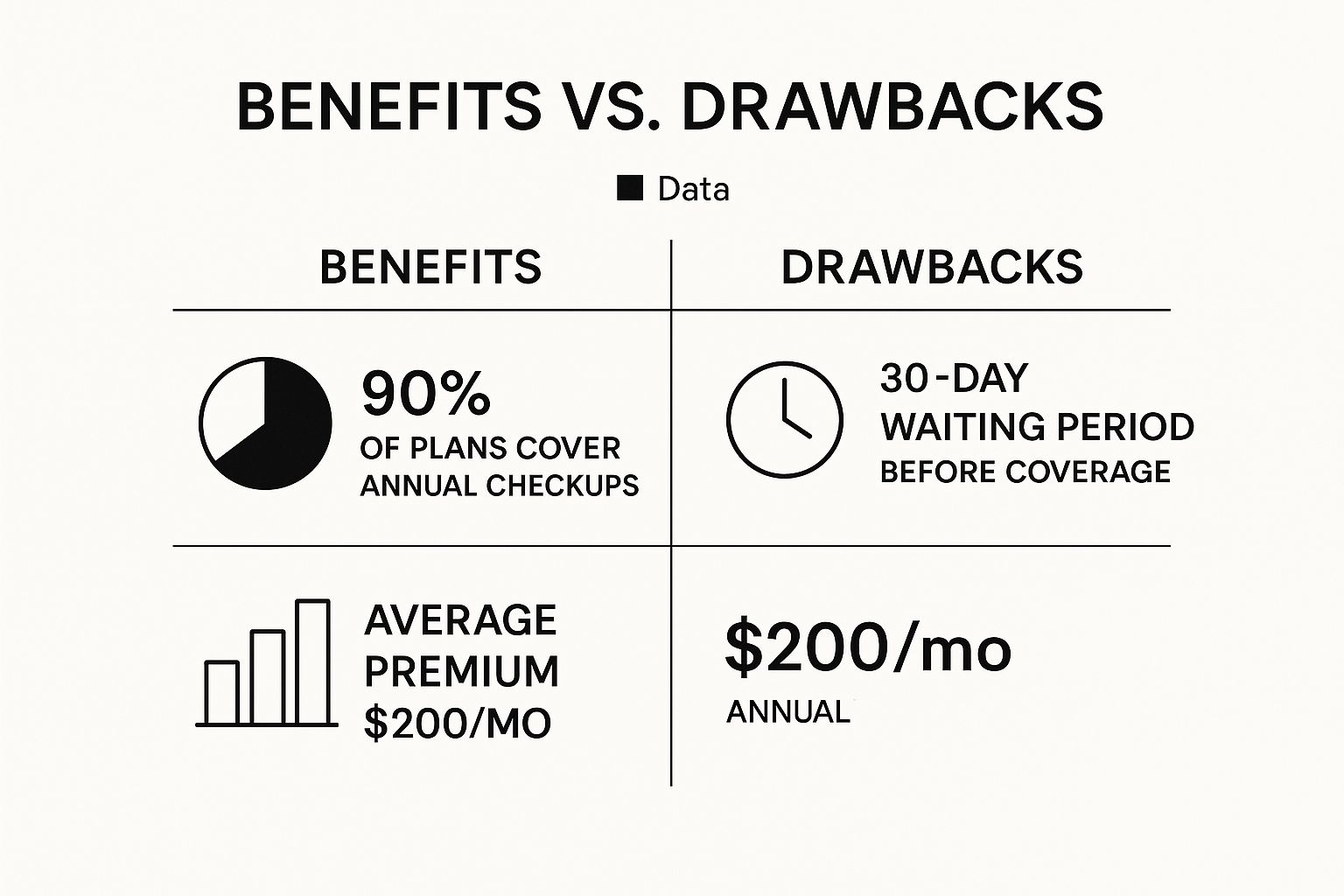
Creating Your Checklist
To find the best policy for you, a simple checklist can be your best friend. Asking these key questions will ensure you have covered all the important bases.
- What is my realistic monthly budget?
- How high an excess am I comfortable paying if I need to claim?
- Do I need full outpatient cover, or is a core inpatient plan sufficient?
- Which hospitals are on the list, and are they conveniently located for me?
- Does the policy include robust cancer cover as standard?
- Are optional extras like physiotherapy or mental health support important to me?
By working through these points, you can build a clear picture of your ideal policy and compare quotes based on genuine value, not just price.
Beyond Treatment: Modern Policy Benefits

A good health insurance policy today is about more than just paying hospital bills; it is a proactive tool for managing your overall wellbeing. Insurers recognise that peace of mind comes from feeling supported day-to-day, even when you are well.
This means many policies now include valuable benefits designed to keep you healthy and provide support when you need it. These extras can transform a policy from a simple safety net into a comprehensive support system.
Proactive Health and Wellbeing Support
Many top UK providers of over 50s health insurance now include a suite of benefits you can use anytime, without making a formal claim. These perks are about convenience, reassurance, and practical help.
Common added benefits include:
- 24/7 Virtual GP Access: This allows you to book a video or phone appointment with a private GP, often for the same day. It is incredibly useful for getting quick advice, prescriptions, or a specialist referral from home.
- Mental Health Support Lines: Many policies provide confidential access to trained counsellors and therapists. This service can offer crucial support for issues like stress, anxiety, or bereavement.
- Health and Fitness Discounts: To encourage a healthy lifestyle, insurers often partner with gyms, fitness apps, and wellness brands to offer their members attractive discounts.
This holistic approach shows a growing understanding that our health is multifaceted. Having immediate access to a GP or mental health professional can reduce the anxiety that comes with health uncertainty, giving you and your family a real sense of security.
The Value of Peace of Mind
The need for this reassurance is clear. Research from Age UK found that less than half (48%) of people aged 50 and over in the UK felt confident the NHS could handle any medical problem they faced.
With one in four reporting long waits for referrals and diagnoses, it is easy to see why having a robust support system is so important. You can learn more about the health and care challenges facing over-50s and see for yourself what is driving this trend.
Ultimately, these modern benefits show that the right policy is not just a reactive measure for when things go wrong. It is an investment in your ongoing health, giving you the tools to live well and the confidence that support is always just a phone call away.
Frequently Asked Questions (FAQ)
Here are clear, direct answers to some of the most common questions about over 50s health insurance.
Is it too late to get health insurance over 60 or 70?
No, it is not too late. Most UK insurers do not have an upper age limit for taking out a new policy. However, premiums will be higher than for someone in their 50s, and any pre-existing conditions from the last five years will be excluded.
Will my premiums go up every year?
Yes, you should expect your premiums to rise each year. This is due to two factors: your age increasing, and 'medical inflation'—the rising cost of private healthcare, new treatments, and advanced technology. It is wise to budget for an annual increase.
Do I still need the NHS if I have private cover?
Absolutely. Private medical insurance is designed to work with the NHS, not replace it. The NHS will still be your provider for emergency care (A&E), routine GP services, and the management of long-term chronic conditions like diabetes or arthritis.
Can I add my partner to the same policy?
Yes, most insurers offer joint policies that allow you to cover both yourself and your partner under one plan. This can be more convenient and sometimes more cost-effective than managing two separate policies. It is always best to compare the cost of a joint plan against two single ones.
Ready to find a health insurance plan that gives you peace of mind? At Discount Life Cover, we make it easy to compare quotes from leading UK providers.
Get your free, no-obligation health insurance quote today
This article is for information purposes only and does not constitute financial advice. Discount Life Cover is not providing personalised recommendations. Insurance policies vary depending on individual circumstances. For advice tailored to your situation, please speak with a qualified financial adviser or request a personalised quote.


