Critical illness cover is a specific type of insurance that pays out a tax-free lump sum if you’re diagnosed with one of the serious illnesses listed in your policy. You can think of it as a financial safety net designed to protect you while you're still alive, which makes it very different from a standard life insurance policy that only pays out when you pass away.
This guide explains what critical illness insurance covers, how it works in the UK market, and what you should consider before choosing a policy.
Understanding Critical Illness Cover
At its core, critical illness cover gives you a one-off payment right after you’ve been diagnosed with a serious, often life-altering, health condition that’s specified in your policy documents. This money is designed to give you essential financial breathing room, letting you focus on getting better rather than stressing about bills.

This type of cover helps with the huge financial shock a serious illness can cause. For instance, imagine a homeowner is diagnosed with a severe heart condition and can't work for months. The payout could be used to cover their mortgage payments, removing the risk of losing their home while they recover.
How a Policy Pays Out
Once you’re diagnosed with an illness covered by your policy, you can start the claim process. One of the key bits of small print to be aware of is the 'survival period'. This is a short, defined timeframe—usually around 10 to 14 days—that you must survive after your diagnosis for the insurer to pay the claim.
In the UK, this insurance has become a vital financial backup for many families. Most policies list between 50 and 100 specific illnesses, but the big ones like cancer, heart attack, and stroke still account for over 80% of all claims. To get a better feel for the details, you can explore more about the best critical illness cover in the UK and see how different policies stack up.
The whole point of critical illness cover is to take the financial pressure off your shoulders during a time of immense personal stress. It gives you the freedom to make choices about your care, work, and lifestyle without money being the deciding factor.
The amount of cover you need comes down to your own circumstances. You'll want to think about things like:
- How much is left on your mortgage?
- What are your monthly household bills and living costs?
- Would you need funds for private medical treatment?
- What are the financial needs of your family or dependants?
Ultimately, this cover is about peace of mind. It’s knowing that a financial buffer is there for you and your family if the unexpected happens.
Critical Illness Cover at a Glance
| Feature | Description |
|---|---|
| Payout Type | A one-off, tax-free lump sum paid upon diagnosis of a specified illness. |
| Purpose | To provide financial support during your lifetime while you recover or adapt. |
| Covered Conditions | Policies list specific illnesses. The "big three" are cancer, heart attack, and stroke. |
| Survival Period | You typically need to survive for a short period (e.g., 10-14 days) post-diagnosis. |
| Claim Trigger | The diagnosis must meet the precise definition outlined in the policy wording. |
| Flexibility | The payout can be used for anything—mortgage, bills, treatment, or lifestyle changes. |
This table should give you a clear, snapshot view of what the cover involves, but remember to always dig into the policy details before making a decision.
The Core Conditions Most Policies Include
When you ask what does critical illness cover, the answer usually starts with a core group of serious illnesses. UK insurance providers design their policies around the conditions that most commonly have a significant, life-altering impact on you and your family.

Most policies are built around what the industry often calls the ‘big three’. These are the conditions that account for the overwhelming majority of claims paid out by UK insurers each year.
The 'Big Three' Explained
While a policy might list dozens of illnesses, your protection hinges on these three key areas. Getting your head around them is the first step to understanding what your cover is for.
- Cancer – This is, by far, the most common reason for a claim. Policies will specify which types and severities of cancer are covered. It must usually be malignant and have spread. Less severe or very early-stage cancers might not meet the policy definition for a full payout, so the wording is key.
- Heart Attack – Another major reason for claims. Your policy will have a precise medical definition for this, often requiring evidence of specific changes on an ECG or certain levels of cardiac enzymes. This is the insurer's way of confirming the death of heart muscle tissue.
- Stroke – To qualify for a payout, a stroke typically has to result in permanent neurological symptoms that last for a specified period, usually at least 30 days. This confirms a lasting impact on your health and ability to function, which is what the cover is designed for.
It is crucial to realise that a diagnosis alone isn’t always enough. Insurers use specific medical definitions and severity requirements to figure out if a claim is valid. This is to ensure the payout is reserved for genuinely life-changing events, not less severe conditions that may not have the same devastating financial consequences.
Other Commonly Covered Conditions
Beyond the big three, a comprehensive policy will list plenty of other serious illnesses. The exact number varies between insurers like Aviva, Legal & General, and Zurich, but you'll find a standard set of additional conditions that offer broader protection.
Think of your policy as a list of specific scenarios. If your medical diagnosis matches one of those scenarios precisely as described in the policy document, it triggers the payout. The detail is what matters.
This extended list often includes conditions such as:
- Multiple Sclerosis (MS) – A diagnosis must typically show symptoms that have persisted for a set period.
- Kidney Failure – This usually requires permanent and irreversible failure of both kidneys, making regular dialysis a necessity.
- Major Organ Transplant – This covers receiving a heart, lung, liver, kidney, or pancreas transplant from another human donor.
- Parkinson's Disease – The diagnosis must be confirmed by a neurologist and show progressive, permanent symptoms.
Policies are there to protect against a wide range of health crises. By covering these core conditions, critical illness insurance provides a financial buffer that allows you to focus on your health without the added stress of immediate money worries.
Common Exclusions and What Is Not Covered
Understanding what your critical illness policy covers is only half the story. Just as vital is getting to grips with what it doesn't cover, so you know exactly where you stand. A policy is a specific agreement, meaning not every illness or medical situation will automatically trigger a payout. Insurers have clear definitions and exclusions in place to keep the cover focused on its intended purpose.
One of the most common hurdles for a claim is when an illness doesn't meet the policy definition or the required severity level. For example, a diagnosis of a very early-stage, non-invasive cancer might not qualify for a full payout because the long-term financial fallout is seen as less severe. It's a similar story for minor heart attacks or strokes that thankfully don't leave any permanent symptoms.
Key Reasons a Claim Might Be Unsuccessful
Being upfront and honest from the start of your application is crucial. The vast majority of successful claims come from people who provided full and accurate information when they took out the policy.
Here are the usual reasons when a claim is turned down:
- Non-Disclosure of Pre-existing Conditions: This is a big one. If you don't mention a health condition you had before the policy started, the insurer could void your cover when you later try to claim. When it comes to insurance applications, honesty is always the best policy.
- Illness Not Meeting the Definition: As we mentioned, your diagnosis must line up precisely with the insurer’s medical definition. This often includes hitting specific benchmarks for severity, how long symptoms have lasted, or the results of certain diagnostic tests.
- Lifestyle-Related Exclusions: Many policies won't pay out if your illness is a direct result of drug or alcohol misuse. Insurers see this as a self-inflicted risk that sits outside the scope of standard cover.
- Self-Inflicted Injury: Deliberately harming yourself is a standard exclusion across almost every insurance policy in the UK, including critical illness cover.
- Living Abroad: If you move outside the UK (or a list of approved countries) for a long time, your policy might become invalid. It’s always worth checking the territorial limits with your provider if you’re planning a big move.
Your policy document is your definitive guide. It’s not just boring small print; it’s the official rulebook for your cover. Taking an hour to read and understand these definitions and exclusions can save you disappointment down the line.
Insurers are regulated by the Financial Conduct Authority (FCA) and are committed to paying valid claims. Knowing about these common exclusions helps you understand your side of the bargain as a policyholder and ensures you have the right protection in place.
How You Can Use a Critical Illness Payout
Getting diagnosed with a serious illness is a deeply personal and overwhelming experience. The last thing you want to be thinking about is money. This is where a critical illness payout proves its worth, acting as a financial cushion so you can focus on what matters: your health and recovery.

The best part? The tax-free lump sum is entirely yours to use however you see fit. There are no strings attached, which gives you immense flexibility to deal with the unique financial pressures a life-changing health event brings. This adaptability is one of the policy's greatest strengths.
Real-World Financial Support
For a homeowner, the first worry is often the mortgage. A payout can cover your monthly payments while you’re off work, removing the threat of falling behind or, in the worst-case scenario, losing your home. That kind of stability is vital when your regular income suddenly stops.
For a young family, the funds could be a lifeline, helping to:
- Cover everyday bills: From the gas and electric to council tax and the weekly food shop, the payout ensures your household keeps running smoothly.
- Pay for specialist care: It could open doors to treatments or consultations not easily available on the NHS, giving you more control over your healthcare options.
- Adapt your home: If your illness affects your mobility, the money could pay for things like a stairlift or a wet room, helping you maintain your independence at home.
- Clear existing debts: Using the lump sum to pay off credit cards or loans can slash your monthly outgoings and take a massive weight off your shoulders.
The funds could also provide for essential care services, such as understanding what respite care involves for an elderly family member, which can offer much-needed relief to caregivers.
At its heart, the payout is about empowerment. It gives you the financial freedom to make choices based on your health needs, not just your bank balance. It puts you back in control when you need it most.
If you're exploring other ways to safeguard your earnings, our guide to income protection cover offers valuable information.
Choosing the Right Critical Illness Policy for You
Picking the right critical illness policy isn't about finding a "best" universal option; it's about matching the cover to your life and finances. This isn't a one-size-fits-all product, so getting to grips with the main types is your first step to making a smart choice.
You'll need to decide between a standalone critical illness policy or one that's combined with life insurance. A standalone policy is straightforward – it pays out if you're diagnosed with a covered illness, and then the policy ends.
A combined policy bundles life and critical illness cover together. This route is often , but there's a catch: most will only pay out once. That means you get the lump sum either on diagnosis of a critical illness or on death, whichever comes first.
Level Cover vs Decreasing Cover
Another big decision is how you want your payout to behave over the life of the policy. This is where you'll choose between level and decreasing cover, and each one is built for a different job.
Level Cover: With this one, the payout amount is locked in and stays the same for the entire policy term. If you get £100,000 of cover for 25 years, it doesn't matter if you claim in year one or year 24 – the payout is £100,000. This makes it a solid choice for families who want a reliable financial safety net to handle living costs and other long-term expenses.
Decreasing Cover: Here, the payout amount shrinks over time. It’s designed to run alongside a large debt that you're paying off, like a repayment mortgage. As your mortgage balance goes down, so does your cover. Because the potential payout drops over the years, the premiums are usually than level cover, making it an affordable way to ensure your home is protected.
Level Term vs Decreasing Term Critical Illness Cover
| Feature | Level Term Cover | Decreasing Term Cover |
|---|---|---|
| Payout Amount | Stays the same throughout the policy term. | Reduces over time, typically monthly or annually. |
| Best For | Protecting a family's lifestyle, covering long-term expenses, or an interest-only mortgage. | Protecting a repayment mortgage or other large loan that is being paid off. |
| Premium Cost | Generally higher because the risk to the insurer remains constant. | Usually as the potential payout decreases over the years. |
| Example | A £150,000 policy will pay out £150,000 whether you claim in year 2 or year 20. | A £150,000 policy might only pay out £50,000 if you claim near the end of the term. |
Ultimately, the choice comes down to what you're trying to protect. If it's a specific debt, decreasing term makes sense. If it's your family's overall financial wellbeing, level term offers a fixed, reliable buffer.
For a deeper look into policy options, our guide on the best critical illness cover in the UK breaks it all down with detailed comparisons.
Considering Your Family's Needs
For any parent, looking after the children is priority number one. Insurers in the UK understand this, which is why many now include children's critical illness cover either as a standard part of their policies or as an affordable add-on.
This valuable feature provides a smaller lump sum payout if your child is diagnosed with one of the serious conditions listed in the policy. The amount is usually a percentage of your main cover, often capped between £25,000 to £50,000.
That money can be a lifeline, helping cover costs for taking time off work, travelling to and from hospital appointments, or arranging specialist care. It provides crucial support right when your family is under the most pressure, so it's a feature well worth looking for when you're comparing policies.
Navigating The Claims Process Step by Step
The thought of making an insurance claim can feel daunting, especially when you’re already grappling with a serious diagnosis. However, UK insurers have refined this process to be as straightforward as possible so you can get the support you need without extra hassle.
The process starts the moment you or a loved one contacts your insurer about your diagnosis. From there, they'll walk you through the next steps, which usually involves filling out a claim form and giving them permission to access your medical records.
Gathering Your Evidence
Your insurer's job is to check that your diagnosis lines up with the specific definition written in your policy. To do this, they need solid medical evidence.
This typically comes straight from your UK-based specialist or consultant. They'll provide your medical history, any test results, and the formal diagnosis that the insurer needs to assess the claim. It’s the insurer’s job to chase this information, but having your own records ready can help move things along.
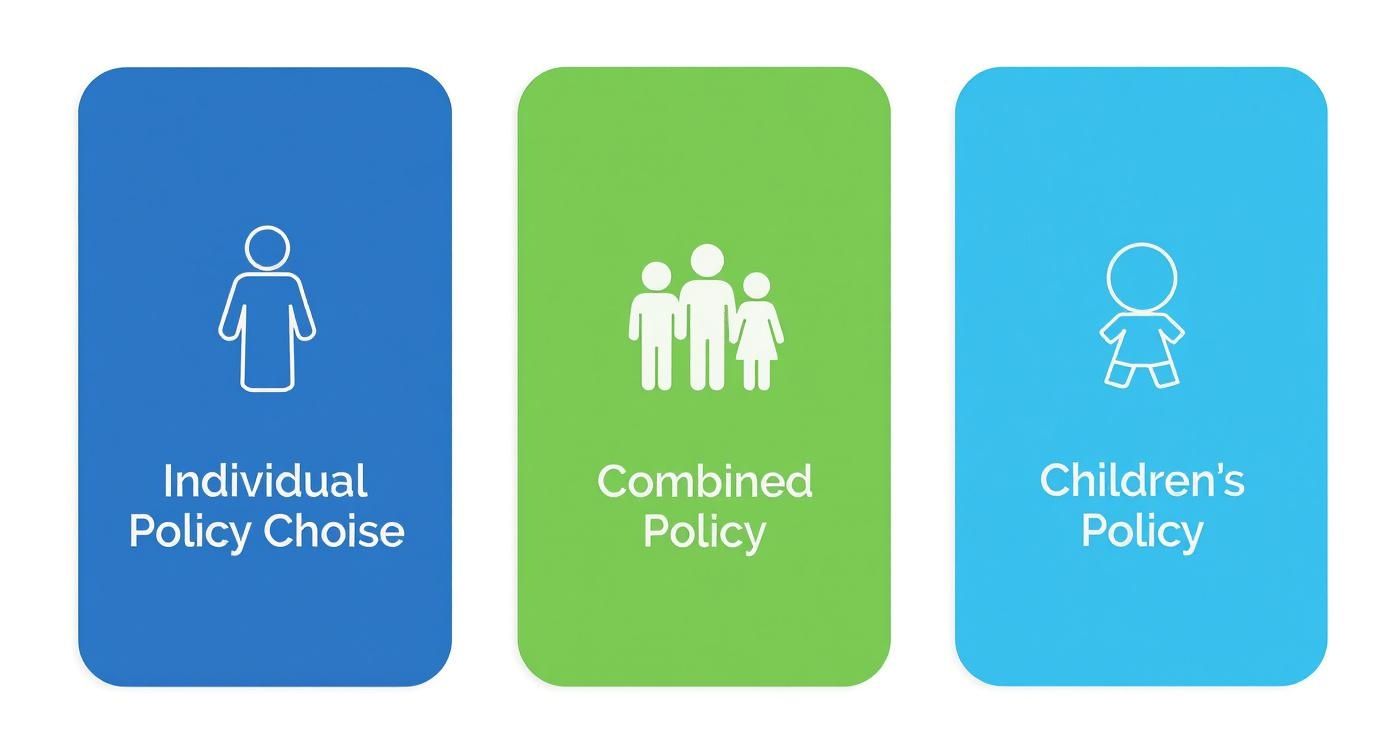
Thinking about this process highlights why understanding your policy options—standalone, combined, or children's cover—is so important from the start.
Assessment and Payout
Once all the evidence is in, the insurer’s claims team reviews everything against your policy's terms and conditions. One key detail is the ‘survival period’. This is a standard clause in most policies, requiring you to survive for a short window (often 10-14 days) after your diagnosis for the claim to be paid.
It's reassuring to know that legitimate claims are overwhelmingly successful. This process isn't designed to catch you out; it's a necessary step to confirm the claim is valid under the terms you agreed to.
The numbers back this up. Data from the Association of British Insurers (ABI) shows that insurers paid out 91.3% of all critical illness claims in 2022, totalling £1.22 billion. Leading insurers like Aviva and Legal & General consistently post high payout rates, proving the system works for most people.
For a more detailed look, our guide on how to claim on a life insurance policy breaks down many similar steps that you'll also encounter in the critical illness claims process.
Your Questions Answered (FAQ)
It's completely normal to have questions when you're looking into something as important as critical illness cover. Let's tackle some of the most common ones.
Can you claim more than once on a policy?
Traditionally, critical illness policies were a "one and done" deal – you made a claim, received your payout, and the policy ended.
Thankfully, the market has moved on. Many top UK insurers now offer policies where you can claim more than once. For instance, you might get a 100% payout for something major like a heart attack, but the policy could stay active to cover you for a completely different condition, like a specific type of cancer, down the line. Look for terms like "reinstatement" or "multiple claims" in the policy details.
How do pre-existing conditions affect your cover?
Being upfront and honest about your medical history from the start is absolutely crucial. When you , the insurer will ask about any conditions you already have.
Here's how it usually plays out:
- Standard Cover: If it's a minor or well-managed condition, you might be offered cover at the standard price.
- Higher Premiums: For more significant health issues, the insurer might see a higher risk and charge you more for your premiums.
- Exclusions: Sometimes, they'll offer you a policy but will add an exclusion. This means you're covered for everything except for claims directly linked to your pre-existing condition.
- Application Declined: In some rare cases, if a condition is particularly severe, the insurer might decide they can't offer you cover.
What is the difference between critical illness and income protection?
It’s easy to get these two mixed up because they both help you financially when you're ill. But they work in very different ways.
Critical illness cover provides a one-off, tax-free lump sum if you are diagnosed with a specific serious condition listed on your policy. You can use this money for anything – adapting your home, paying off the mortgage, or covering private medical bills.
Income protection insurance, on the other hand, is designed to be your replacement salary. If any illness or injury stops you from working, it pays you a regular monthly income after a pre-agreed waiting period. It’s built for longer-term support, keeping the bills paid while you focus on getting better.
Feeling clearer about your options? The expert team at Discount Life Cover is ready to help you compare quotes from leading UK insurers and find the right protection for your circumstances.
Get Your Free, No-Obligation Quote Today
This article is for information purposes only and does not constitute financial advice. Discount Life Cover is not providing personalised recommendations. Insurance policies vary depending on individual circumstances. For advice tailored to your situation, please speak with a qualified financial adviser or request a personalised quote.
Leave a Reply