
Deciding if you need critical illness cover can feel like a big decision. Put simply, it’s a type of insurance that pays you a tax-free, lump sum if you’re diagnosed with a specific serious illness listed in your policy. It's designed to provide a crucial financial buffer when you and your family need it most.
This guide will walk you through what the cover does, who it's for, and how to work out if it's the right choice for your circumstances.
What Is Critical Illness Cover and How Does It Work?

Critical illness cover is designed to give you a financial safety net if your health takes an unexpected and serious turn. It's different from income protection cover, which typically pays a regular monthly sum. With critical illness cover, you receive a single lump sum payment upon diagnosis of a condition your policy covers.
Think of it as an emergency fund specifically for a health crisis. The money is yours to use however you see fit, which gives you vital flexibility during what is bound to be a difficult time. Many people find the payout essential for managing the immediate financial shock that often accompanies a serious diagnosis.
How You Could Use the Payout
The freedom to use the funds is one of the policy's biggest benefits. You could decide to:
- Clear major debts: Paying off your mortgage or other large loans can significantly reduce your monthly outgoings, taking a huge weight off your shoulders.
- Fund medical costs: The payout could allow you to access private treatment, helping you bypass potential NHS waiting lists or pay for specialist care not available on the NHS.
- Adapt your home: You might need to make changes to your house, such as installing a ramp or a stairlift, to accommodate new mobility needs.
- Replace lost income: The lump sum can give you and your family breathing space to cope with recovery without the pressure of having to rush back to work.
It’s worth noting that this type of insurance is different from life insurance, although they are often bought together as a combined policy. To get a better handle on the nuts and bolts, you might want to read our detailed guide on what critical illness insurance is. It provides a straightforward breakdown of how these policies work and what to look for, helping you make a much more informed decision.
Who Might Benefit Most from Critical Illness Cover?

While anyone could benefit from a financial safety net, this type of insurance becomes particularly vital for certain people at specific life stages. The best way to figure out if it's right for you is to take a hard look at your own circumstances. Your responsibilities and financial situation create different levels of risk, and this cover is designed to plug those potential gaps.
Homeowners with a Mortgage
If you have a mortgage, a critical illness diagnosis could make keeping up with repayments incredibly difficult. A lump-sum payout could potentially clear the entire outstanding balance, ensuring you and your family have a secure roof over your heads without the constant worry of losing your home. The same logic applies to other large debts, like car finance or personal loans. Clearing these can free up much-needed cash for other essential costs.
Parents and Guardians
For anyone with dependent children, the financial shock of a serious illness can be devastating. A payout helps ensure your children’s futures aren’t compromised because of your health.
The funds could be used for:
- Day-to-day living costs: Keeping the lights on and food on the table.
- Childcare expenses: Paying for help if you're physically unable to manage childcare yourself.
- Future education: Earmarking funds for school fees or university down the line.
Ultimately, it’s about maintaining a sense of stability for your family when everything else feels uncertain.
Self-Employed Individuals and Contractors
When you work for yourself, there’s no safety net of statutory sick pay or a comprehensive employee benefits package. A long period off work due to illness could mean your income drops to zero overnight, putting both your business and personal finances at immediate risk. While you should also investigate income protection cover, a critical illness payout provides a single, substantial sum to keep you afloat.
People with Limited Savings
If you don't have a significant savings pot to fall back on (a common recommendation is 3-6 months of essential outgoings), a sudden loss of income could be catastrophic. Critical illness cover acts as your emergency fund, providing the capital you need to navigate a health crisis without falling into debt.
Critical illness cover provides financial flexibility at a time when loved ones need to focus on support, not financial strain. This practical guide to supporting someone with cancer gives a great overview of the many non-medical needs that arise during treatment – exactly the kinds of things a payout can help manage.
What Conditions Does a Policy Actually Cover?

It’s crucial to understand that critical illness cover doesn't pay out for any and every serious health problem. Every policy from UK insurers like Aviva or Scottish Widows has a specific list of conditions it covers. A payout only happens if your diagnosis precisely matches the medical definition written in your policy documents. This is why it is essential to read the small print.
An insurer won’t pay out just because you've been diagnosed with an illness. It has to be on their list and often needs to reach a certain level of severity before a claim is considered.
Common Conditions and the Importance of Severity
Most policies are built to cover the major, life-changing conditions that unfortunately affect many people in the UK. While some comprehensive policies cover over 100 conditions, you'll find a core set of illnesses included in almost every standard plan.
These usually include:
- Specific types of cancer that are invasive.
- Heart attacks that meet a defined level of seriousness.
- Strokes leading to permanent neurological damage.
- Major organ transplants, such as a heart, lung, or liver.
- Kidney failure that requires permanent dialysis.
The key word here is severity. A diagnosis isn't always enough. For instance, some very early-stage cancers or minor heart attacks might not meet the strict definition laid out in the policy, meaning they won't trigger a full payout. This is a common point of confusion and a key reason why you must understand the terms before you commit.
Commonly Covered Conditions vs Potential Exclusions
To make this clearer, it helps to see what’s typically included versus what might be excluded. Remember, every policy is different, so this is just a general guide.
| Typically Covered (subject to policy definition) | Potential Exclusions or Reasons for Non-Payout |
|---|---|
| Heart attack (of specified severity) | Angina or a heart attack that doesn't meet the specific medical criteria. |
| Stroke (resulting in permanent symptoms) | A transient ischaemic attack (TIA) or 'mini-stroke' with temporary symptoms. |
| Invasive cancer | Non-invasive cancers, low-grade prostate cancer, or some types of skin cancer. |
| Multiple Sclerosis (MS) (with persistent symptoms) | A diagnosis where symptoms are mild and don't meet the definition of permanent impairment. |
| Major organ transplant | Being on the waiting list for a transplant may not be enough; the surgery itself is often the trigger. |
| Kidney Failure (requiring permanent dialysis) | Temporary kidney issues or conditions that don't require long-term, permanent dialysis. |
This table highlights just how specific the definitions can be. It’s not about downplaying an illness; it's about the insurer adhering to the exact terms of the contract.
Reasons a Claim Might Be Declined
While the vast majority of critical illness claims are paid, some are declined. Understanding why can help you avoid common pitfalls.
Most declined claims boil down to two main reasons.
First is non-disclosure. When you , you must be completely honest about your medical history, lifestyle (including smoking and drinking habits), and any known family health issues. If you withhold information that later comes to light during a claim, the insurer may have grounds to void your policy.
The second major reason is that the condition doesn't meet the policy definition. As mentioned, your diagnosis must tick all the boxes outlined in your policy documents. This is exactly why it pays to compare what different insurers cover before deciding if you need critical illness cover and which provider is the right fit.
How Insurers Calculate Your Premiums
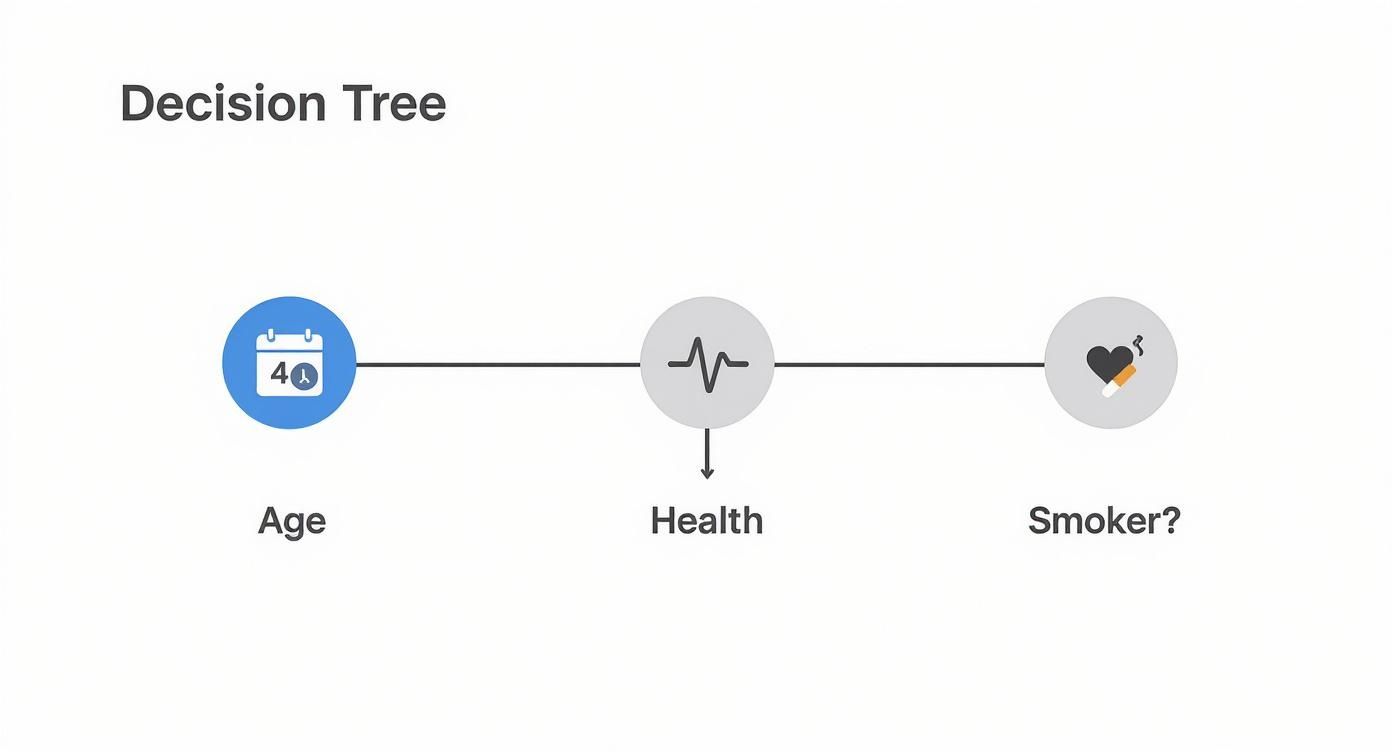
When you request a critical illness cover quote, the price isn't arbitrary. Insurers, regulated by the Financial Conduct Authority (FCA), undertake a detailed risk assessment process called underwriting. They are essentially calculating the likelihood of you making a claim.
Several personal factors shape your final premium. Understanding these will help you see why your quote might differ from someone else's and what you can do to find more affordable protection.
The Main Factors Influencing Your Quote
Your premium directly reflects the risk the insurer is taking on. The higher they perceive that risk to be, the more you'll pay each month.
Here are the primary factors they assess:
- Your Age: This is a major factor. The younger you are when you take out a policy, the it is likely to be, as you are statistically less likely to be diagnosed with a serious illness.
- Your Health and Medical History: You'll be asked about your current health, weight, any pre-existing conditions, and your family's medical history.
- Your Lifestyle: The key question here is whether you smoke or vape. Smokers always pay significantly more for cover due to the well-documented health risks.
- Your Occupation: Some jobs carry higher risks than others. A role with a greater chance of injury or health issues can increase your premium.
- The Amount of Cover (Sum Assured): The size of the payout you want directly impacts the cost. A £200,000 policy will cost more than a £50,000 one.
- The Policy Term: How long you want to be covered for also plays a part. A policy running for 30 years will be more expensive than one lasting for 15 years.
vs Reviewable Premiums
One of the most important decisions is whether to opt for competitive or reviewable premiums, as this choice can significantly impact your long-term finances.
- premiums are fixed for the entire length of your policy. The price you pay on day one is the same price you'll pay in the final year. This provides certainty and makes budgeting easier.
- Reviewable premiums usually start but are reassessed by the insurer periodically (often every five years). This means your costs could increase over time based on your age or wider medical data trends, potentially becoming much more expensive than you planned for.
The UK's critical illness insurance market is growing, with projections suggesting it could be worth $27.5 billion by 2035, according to reports from marketresearchfuture.com. This growth is driven by an increasing awareness of the need for a financial safety net. With this expanding market comes more choice, making it vital to understand exactly how your premium is calculated.
Making an Informed Decision For Your Life
Figuring out if you need critical illness cover is a deeply personal choice that depends on your financial situation and who relies on you. While this article cannot constitute personal financial advice, it can help you ask the right questions to assess your potential vulnerabilities.
Start by getting a clear picture of your finances. This is simply about knowing where your money goes each month and what would happen if your income suddenly stopped.
Key Questions To Ask Yourself
Answering these questions honestly will help you spot any gaps where a financial safety net could make all the difference.
- What are my essential monthly outgoings? Add up your mortgage/rent, council tax, bills, food, and any loan payments. What is the bare minimum your household needs to function?
- How much is left on my mortgage? For most people, this is their largest debt. A critical illness payout could clear it entirely, removing a massive financial burden.
- Does anyone rely on my income? This could be a partner, children, or even elderly parents you support. How would they cope financially without your contribution?
- What sick pay does my employer offer? Check your employment contract. How long does full sick pay last before it reduces or stops completely?
- Are my savings sufficient? A common rule of thumb is to have three to six months' worth of essential expenses saved. How does your savings pot measure up?
Standalone Cover vs Combined Policies
Another key decision is whether to get critical illness cover on its own (standalone) or combine it with a life insurance policy. A combined policy is often , but there's a catch: it usually only pays out once. If you claim for a critical illness, the entire policy, including the life insurance, often ends.
A standalone policy keeps your life insurance completely separate, so a critical illness claim won't affect it. You can explore the options in more detail in our guide to the best critical illness cover in the UK.
It's also worth being aware of other types of cover, such as Total and Permanent Disability (TPD) claims. These policies work differently, typically focusing on whether you are able to work again rather than a specific medical diagnosis.
Ultimately, only you can answer the question, "Do I need critical illness cover?". By working through these points, you'll be in a much better position to weigh up your options and make a confident decision.
Frequently Asked Questions (FAQ)
To wrap up, here are answers to some of the most common questions people ask about critical illness cover.
Can I get cover if I have a pre-existing medical condition?
It is often possible, but it depends on the specific condition. Insurers will assess your medical history when you . For a minor or well-managed condition, you may be offered cover at standard rates or with a slightly higher premium. For more serious conditions, the insurer might offer a policy that excludes that specific illness. In some cases, they may decline cover. The key is to be completely honest on your application.
Does critical illness cover have a cash-in value?
No, it does not. It is a pure protection policy, like car or home insurance, not an investment product. It does not build up a cash-in value. If you stop paying premiums or the policy term ends without a claim, the cover simply ceases, and you don't get any money back.
What’s the difference between critical illness and income protection?
This is a really important distinction as they serve very different purposes.
- Critical Illness Cover: Pays a one-off, tax-free lump sum if you are diagnosed with a specific, serious illness listed in your policy. You can use this money for anything, from paying off a mortgage to funding private treatment.
- Income Protection: Pays a regular, monthly tax-free income if you are unable to work due to any illness or injury (not just from a specific list). It is designed to replace a portion of your salary to cover ongoing living costs.
Some people choose to have both to create a comprehensive financial safety net.
How much cover do I actually need?
This is a personal calculation and is central to answering the question, "do I need critical illness cover?". A good starting point is to aim to clear your largest debts, such as your mortgage. Many people also factor in enough to cover their annual salary for one or two years to create some breathing room. Consider your mortgage balance, essential monthly bills, potential medical costs, and whether you have financial dependants.
Is the payout from a critical illness policy taxed?
No. In the UK, the lump sum paid out from a personal critical illness policy is completely tax-free. This means every penny of the cover amount is available to you and your family when you need it most, with no deductions for income tax or capital gains tax.
Ready to see how affordable protecting your financial future could be? At Discount Life Cover, we make it simple to compare quotes from the UK’s leading insurers.
Get a free, no-obligation quote in minutes and take the first step towards real peace of mind.
Click here to get your personalised critical illness cover quote today!
This article is for information purposes only and does not constitute financial advice. Discount Life Cover is not providing personalised recommendations. Insurance policies vary depending on individual circumstances. For advice tailored to your situation, please speak with a qualified financial adviser or request a personalised quote.
Leave a Reply