
Choosing the right life insurance policy in the UK boils down to one fundamental question: do you need cover for a specific amount of time, like paying off a mortgage, or do you need it for the rest of your life?
That’s the core difference. Term life insurance is the more affordable option that covers you for a set period. Whole of Life, on the other hand, is a permanent policy that’s more expensive but comes with a competitive payout.
Decoding Your UK Life Insurance Options
Choosing a life insurance policy is a major financial decision, one that provides a crucial safety net for your family's future. It’s designed to make sure your loved ones aren’t left in a difficult financial position if you’re no longer around to provide for them. However, the sheer variety of policies on the UK market can feel overwhelming at first.
At its heart, any life insurance policy is designed to pay out a tax-free lump sum to your family when you pass away. This money is a lifeline that can be used to:
- Clear the mortgage, allowing your family to stay in their home without financial strain.
- Cover day-to-day bills, replacing the income you used to provide.
- Pay for future costs, such as your children's university education.
- Settle inheritance tax bills, so more of your estate goes to your heirs.
A thorough life insurance policies comparison isn't just about finding the cheapest premium. It’s about finding the right type of cover for your specific circumstances. A young couple starting out with a new mortgage has completely different needs to someone in their 60s planning their estate. Understanding the main policy types is the essential first step.
For a deeper dive, our guide on how to choose life insurance is a great place to start.
UK Life Insurance At a Glance
To kick things off, here’s a quick overview of the main policy types you’ll encounter in the UK. This table breaks down what each one is for and who it generally works best for, giving you a solid starting point before we get into the details.
| Policy Type | Primary Purpose | Best Suited For |
|---|---|---|
| Level Term | Provides a fixed payout amount for a set number of years. | New parents wanting to cover childcare costs or an interest-only mortgage. |
| Decreasing Term | The payout amount reduces over time, usually in line with a debt. | Homeowners with a repayment mortgage, as it’s the most cost-effective option. |
| Whole of Life | Offers a competitive payout whenever you pass away, with no end date. | Individuals planning for funeral costs or looking to cover an inheritance tax bill. |
As you can see, each of these policies is built to solve a different financial problem. Once you understand their core purpose, you’re in a much better position to figure out which one offers the most sensible and affordable protection for your family.
Term vs Whole of Life: A Practical Comparison
When you start looking into life insurance, the first big choice you'll face is: Term or Whole of Life? They are built for completely different jobs. Understanding the practical trade-offs is the key to protecting your family properly. The right one for you boils down to your goals, your budget, and where you are in life.
Term life insurance is the most common and affordable type of cover in the UK. It’s designed as a temporary safety net, protecting your family for a specific period—the "term"—which could be anything from 10 to 40 years. If you pass away during that time, your family receives a tax-free lump sum. If you outlive the policy, it simply expires, and there’s no payout.
This makes it the perfect tool for covering large debts with a definite end date, like a mortgage. For most families, it’s all about having peace of mind when their financial responsibilities are at their peak.
This simple decision tree helps illustrate whether a temporary or permanent solution fits your situation.
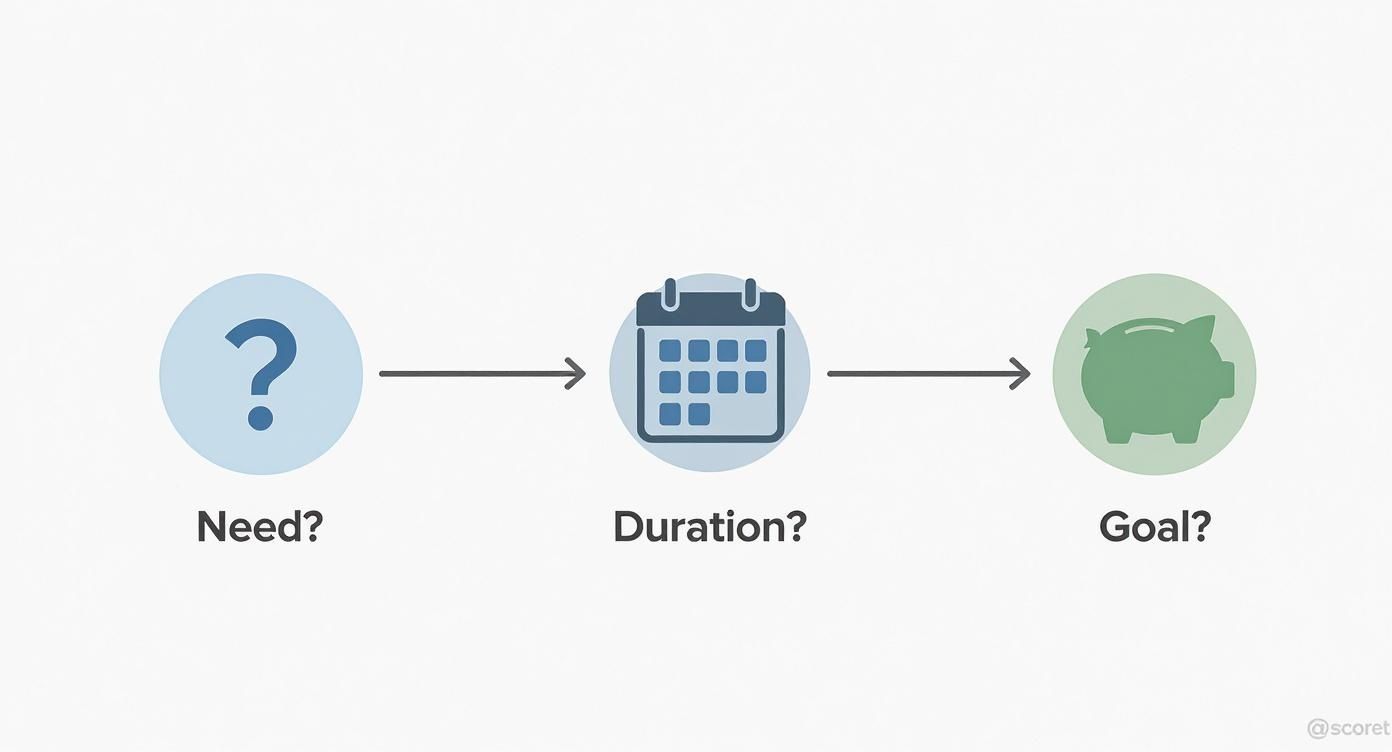
As you can see, the main decider is how long you need the cover for. Is it for a fixed period while the children are growing up, or for the rest of your life? That one question points you in the right direction.
Matching Term Insurance to Your Goals
Even within term insurance, you have two main types, and each is designed for a different purpose.
Level Term Insurance: With this policy, the payout amount (known as the sum assured) stays the same from start to finish. A £200,000 policy will pay out £200,000 whether you pass away in year one or year twenty. That consistency makes it ideal for new parents who want to know there’s enough money to cover childcare, university fees, and general living costs until the children can support themselves.
Decreasing Term Insurance: This is where the payout amount gradually reduces over the life of the policy, usually tracking alongside a repayment mortgage. As you pay off your home loan, you simply don't need as much cover to clear the outstanding balance. Because the risk for the insurer goes down over time, these policies are the most budget-friendly option for homeowners.
Real-World Example:
Imagine a couple in their early 30s buying their first home with a £250,000 repayment mortgage over 25 years. A 25-year Decreasing Term policy is a perfect, cost-effective fit. It guarantees the mortgage would be cleared if one of them passed away, meaning the surviving partner wouldn’t have to worry about losing their home.
When Whole of Life Makes Sense
Whole of Life insurance, on the other hand, does exactly what its name suggests: it covers you for your entire life. As long as you keep paying the premiums, a payout is competitive whenever you pass away. Of course, that guarantee comes at a price—premiums are significantly higher than for term cover.
Because it's a permanent (and more expensive) solution, Whole of Life cover is generally used for very specific financial planning.
It's a powerful tool for things like:
- Covering funeral costs: It provides a set amount to handle funeral expenses so your family doesn’t have to find the money from their own savings.
- Inheritance Tax (IHT) planning: The payout can be used to settle a large IHT bill, ensuring your beneficiaries get to keep more of your estate.
- Leaving a legacy: It’s a straightforward way to guarantee a financial gift is left behind for your children or grandchildren.
The UK life insurance market clearly shows people use both. Recent data from the Financial Conduct Authority (FCA) revealed that in just one quarter, 452,799 life insurance policies were sold, with a total premium value of nearly £13.85 billion. This shows that while plenty of people choose affordable term cover, a significant number are also investing in permanent policies for legacy planning.
If you're weighing up the two, our detailed guide on Whole of Life vs Term insurance dives even deeper into the costs and benefits.
Real-World Example:
Take a 60-year-old whose mortgage is paid off and whose children have left home. They calculate their estate will trigger an inheritance tax bill of around £80,000. They take out a Whole of Life policy for £80,000 and place it in trust. When they pass away, the policy pays out directly to their beneficiaries, who can use that money to pay the tax bill without being forced to sell family assets.
Comparing the Critical Details in Every Policy
The headline price on a life insurance quote is just the tip of the iceberg. The real value is buried in the small print. Getting to grips with these finer details is the only way to do a proper life insurance policies comparison and make sure the cover you choose will actually support your family when they need it most.
Think of this next part as your practical checklist. We're going to look beyond the monthly premium to help you make a smart choice that balances what you can afford now with solid, long-term protection for your loved ones.

Core Policy Features to Scrutinise
When you get a quote, your eyes should immediately jump to a few core pieces of information. These are the nuts and bolts that define how the policy works, how much your family gets, how long you’re covered, and what it’s going to cost you over the years.
- Sum Assured: This is the lump sum payout. Is it genuinely enough? Think about clearing the mortgage, covering day-to-day living costs for a few years, and any other big financial goals you have.
- Policy Term: For term insurance, this is simply how long you're covered for. You'll want it to last until your family is no longer financially dependent on you. This usually means until the mortgage is paid off or the children are financially independent.
- Premium Type: This is a big one. premiums are locked in for the entire policy term. You know exactly what you'll pay from day one to the end. Reviewable premiums often look to start with, but the insurer can increase the price at set intervals. What seems like a bargain now could become unaffordable down the road.
A policy with reviewable premiums might feel like a good deal today, but if those payments suddenly jump in ten years, you could be forced to cancel and lose your cover. For most people, competitive premiums offer invaluable peace of mind.
Important Policy Add-Ons and Clauses
Beyond the core structure, a few optional extras and standard clauses can massively boost your policy’s value and flexibility. When you’re comparing quotes, check if these are included or if you can add them for a small cost.
Indexation (Inflation Protection)
Inflation can silently erode the value of your cover. A £150,000 payout today won't buy nearly as much in 20 years. That’s where indexation comes in. It's an option that increases your sum assured each year, usually in line with the Retail Prices Index (RPI), to help it keep its real-world value. Your premiums will also rise slightly, but it ensures your family gets a meaningful payout, not just a number that looked good on paper decades ago.
Waiver of Premium
What if you’re hit by a serious illness or injury and can’t work? How would you keep paying your premiums? A Waiver of Premium benefit is the answer. If you become incapacitated (according to the insurer's definition), they’ll cover your monthly payments for you, keeping your life insurance active until you're able to work again. It’s a vital safety net.
Terminal Illness Cover
This is now a standard feature on most UK term life policies, and it's a crucial one. If you're diagnosed with a terminal illness and given less than 12 months to live, the policy will pay out the full sum assured early. This gives you and your family access to critical funds during an incredibly tough time. You can learn more about the specifics of what life insurance covers in our comprehensive guide.
Joint vs Single Policies
If you’re in a couple, you’ll need to decide whether to get one joint policy or two separate ones.
- Joint Policy: This is usually a 'first death' policy. It covers two people but only pays out once—when the first person dies. After that, the policy ends, leaving the surviving partner with no cover. They’re often slightly .
- Two Single Policies: This costs a little more but gives you two completely separate pots of cover. If one partner passes away, their policy pays out, and the other partner’s policy continues completely unaffected. If both were to pass away, two lump sums would be paid, which could be a lifeline for dependent children.
Digging into these details transforms your comparison from a simple price check into a proper value-for-money assessment. It’s the only way to be sure you're getting the right protection for your family.
Adding Living Benefits: Critical Illness and Income Protection
Thinking about financial protection often brings to mind what happens after we're gone. But what about right now? A solid financial plan needs a safety net for the living, too. Standard life insurance pays out on death, but what if a serious illness or injury stops you from working and earning an income? That's where 'living benefits' step in.
These are incredibly useful additions to your financial toolkit, designed to provide a lifeline during some of life's toughest moments. Two of the most important options are Critical Illness Cover and Income Protection. They might sound similar, but they solve very different problems.
Critical Illness Cover Explained
Critical Illness Cover is straightforward: if you are diagnosed with a specific, serious medical condition listed in your policy, it pays out a tax-free lump sum. Think major events like a heart attack, stroke, or certain types of cancer. The exact list of covered conditions can vary a lot between insurers, so always check the policy details.
The purpose of this payout is to take immediate financial pressure off your shoulders. It's a cash injection you can use for whatever you need most, such as:
- Paying off the mortgage or clearing other large debts.
- Funding private medical treatment or specialist care not available on the NHS.
- Making adaptations to your home if your mobility is affected.
- Simply covering your bills and replacing lost income while you focus on recovery.
This lump sum buys you breathing space, letting you make clear-headed decisions without money worries.
Income Protection: A Monthly Lifeline
Income Protection works very differently. Instead of one large payout, it provides a regular, tax-free monthly income if you're unable to work because of any illness or injury. It’s designed to replace a portion of your salary, usually paying out between 50% and 70% of your gross earnings.
These payments continue until you’re well enough to return to work, your policy term ends, or you retire—whichever happens first. This makes it an incredibly powerful way to protect your long-term financial stability, ensuring the mortgage, bills, and everyday costs are covered, month after month.
The key difference is this: Critical Illness Cover is tied to a specific diagnosis from a list. Income Protection pays out based on your inability to do your job. This means it covers a much wider range of scenarios, from a builder with a bad back to an office worker signed off with stress.
The UK life insurance market is fiercely competitive, which is great news for consumers. Insurers are constantly refining their products, especially when it comes to these living benefits. This dynamic environment means there are plenty of competitive options out there. You can find more insights on the evolving UK life and annuity market and see how these changes might affect your policy choices.
Comparing Critical Illness and Income Protection
So, which one is right for you? It all comes down to the financial problem you're trying to solve. One gives you a large, immediate cash sum for major costs, while the other protects your monthly budget for the long haul.
Let's put them side-by-side to make it crystal clear:
| Feature | Critical Illness Cover | Income Protection |
|---|---|---|
| Payout Type | One-off tax-free lump sum. | Regular tax-free monthly income. |
| Payout Trigger | Diagnosis of a specific, listed condition. | Being unable to work due to any illness or injury. |
| Primary Use | Covering large debts, medical costs, or major life adjustments. | Replacing your monthly salary to cover ongoing bills and lifestyle costs. |
| Best For | A homeowner wanting to clear their mortgage after a heart attack. | A self-employed person needing to cover their bills during a long recovery. |
For many people, the best solution isn't an either/or choice but a combination of both. A robust protection plan might involve a life insurance policy with a smaller critical illness lump sum attached, alongside a separate income protection policy. This creates a multi-layered defence, ready for whatever life throws at you.
Finding the Best Value When Comparing Quotes
Getting the right life insurance isn't just about ticking a box; it’s about finding real value for your money. This means striking that sweet spot between a premium that doesn't break the bank and cover that will genuinely look after your family if the worst happens. To do that, you need to be smart about how you compare quotes.
The good news is that the UK life insurance market is incredibly competitive. Insurers like Aviva, Legal & General, and Royal London are fighting for your business, which has driven down prices and improved policy terms. This has led to better cover options and fewer unusual exclusions, making it a great time to shop around.
First things first, you need to understand how insurers calculate their prices. Your monthly premium is essentially a calculated risk, based entirely on your personal situation.
How Insurers Calculate Your Premiums
Insurers in the UK, who are all regulated by the Financial Conduct Authority (FCA), use a handful of key factors to work out how much you'll pay. Being upfront with these details is the only way to get a reliable quote.
- Age and Health: It's no surprise that younger, healthier people tend to pay less. Insurers will ask about your medical history, including any pre-existing conditions.
- Lifestyle Choices: Your smoking status is a major factor. Non-smokers pay significantly less. They will also ask about your alcohol consumption.
- Occupation and Hobbies: A high-risk job, like working on an oil rig, or adventurous hobbies like mountaineering, can increase your premiums because they statistically increase your risk.
- Cover Amount and Term: The more cover you want (the sum assured) and the longer you want it for (the policy term), the more it will cost. It's as simple as that.
Being completely honest on your application isn't just good advice—it's essential. Hiding a health condition or your smoking habit is called 'non-disclosure', and it could invalidate your policy, leaving your family with nothing.
Avoiding Common Comparison Pitfalls
When you start getting quotes, it’s all too easy to fall into a few common traps. Knowing what they are ahead of time will help you make a much better choice.
1. Focusing Only on Price
The cheapest policy is almost never the best one. A rock-bottom premium might be hiding reviewable premiums that could shoot up in a few years, or it might be missing crucial benefits like terminal illness cover. Always compare the features, not just the monthly cost.
2. Underestimating Your Cover Needs
It’s tempting to choose a smaller payout amount to get a premium. But you have to properly calculate what your family would actually need to clear the mortgage, pay the bills for a few years, and handle any future expenses. A policy that doesn't provide enough protection defeats the purpose.
3. Ignoring the Power of a Trust
Many people skip this simple, free step. By writing your life insurance policy in trust, the payout goes straight to your chosen beneficiaries instead of getting tangled up in the legal process of probate. This means they get the money much faster and—this is the big one—it usually sits outside of your estate, so it isn't subject to Inheritance Tax.
Once you’ve got a handle on your options, the next step is to see what the numbers look like. For a real-world look at how these factors affect cost, you can compare life insurance quotes directly. By taking your time and being thorough, you can find protection that truly counts.
Matching Your Policy to Your Life Stage
Life insurance isn't a one-and-done purchase. The cover that was perfect when you bought your first flat might be completely inadequate once you have a family. A proper life insurance policies comparison must always start with a simple question: where am I in my life right now?
When you match your cover to your current circumstances, you avoid paying for protection you don’t need and ensure you have enough for the things that truly matter.

New Homeowners and Young Couples
For most people getting on the property ladder, the number one priority is the mortgage. It’s a huge financial commitment, and the last thing you'd want is for your partner to be left struggling with the repayments if you weren't there.
- Best Fit: A Decreasing Term policy is usually the most sensible and cost-effective option here. The payout is designed to shrink over time, roughly in line with your outstanding mortgage balance.
Growing Families with Young Children
The moment children arrive, your financial world shifts. It’s no longer just about the mortgage; it's about ensuring your children are looked after until they can support themselves. This means covering everything from daily living costs and childcare to university fees.
- Best Fit: A Level Term policy is the ideal choice. It provides a fixed lump sum that doesn't decrease over time, guaranteeing a specific amount of money will be there to replace your income and secure your children's future.
Choosing the right policy length is crucial. A good rule of thumb is to pick a term that lasts until your youngest child is likely to have finished their education and become financially independent, which often takes them into their early twenties.
Over 50s and Planning Ahead
As you get older, your financial priorities change. The mortgage might be paid off, and the children may have left home. Your focus might now be on leaving a legacy, covering a potential inheritance tax bill, or simply ensuring your funeral costs are taken care of.
- Best Fit: To cover funeral expenses or leave a small, competitive gift, an Over 50s Life Insurance plan can be a good fit. These policies offer competitive acceptance with no medical questions, but the payouts are typically smaller. For more significant inheritance tax planning, a Whole of Life policy is a much more powerful tool.
Living with a Medical Condition
Getting life insurance with a pre-existing medical condition like diabetes or a heart condition is absolutely possible. The key is to be completely honest during your application.
Insurers just need to fully understand your condition to assess the risk fairly. You should expect to provide detailed information from your GP or specialist. Based on that, the insurer might increase your premium or add specific exclusions. Comparing quotes is essential here, as different providers treat various health issues very differently.
Frequently Asked Questions
When you're wading through life insurance quotes and comparisons, a few specific questions always seem to pop up. Here are clear, no-nonsense answers to the most common queries.
Do I need a medical exam for UK life insurance?
In many cases, no. If you’re young, in good health, and ing for a standard amount of cover, most UK insurers will make a decision based on your application form alone. However, they may request a report from your GP or a quick check-up if you are older, requesting a very large amount of cover, or have pre-existing health conditions.
Is a joint policy better than two single policies?
A joint 'first death' policy is usually , but it only pays out once. After the first partner passes away, the policy ends, leaving the survivor with no cover. Two single policies might cost a little more each month, but they provide two entirely separate pots of cover, offering far greater security for most families.
Can I change my life insurance policy?
You cannot typically change the fundamental terms of a policy once it's active. However, you can cancel it and take out a new one if your circumstances change—for example, if you move to a bigger house and need more cover. It is crucial to ensure your new policy is fully approved and active before you cancel the old one to avoid any gaps in protection.
What happens if I miss my premium payments?
If you stop paying your premiums, your policy will eventually lapse. This means your cover stops, and the policy becomes void. If you were to pass away after the policy has lapsed, your loved ones would receive nothing. This is why it's so important to choose a premium that you can comfortably afford for the entire policy term.
Ready to find the right cover for your family? Take the next step and get a personalised quote to see how affordable peace of mind can be.
This article is for information purposes only and does not constitute financial advice. Discount Life Cover is not providing personalised recommendations. Insurance policies vary depending on individual circumstances. For advice tailored to your situation, please speak with a qualified financial adviser or request a personalised quote.
Leave a Reply